The MRZ code or Machine-Readable-Zone is a set of alphanumeric strings that usually appear on the back of the identity document or passport .
It's a way of adding personal information in an alphanumeric code so that any machine or smartphone can read and convert this code into relevant information . Virtually all passports and identity documents are equipped with a MRZ (Multiple Marker Signature).
A special font (OCR-B) is used to read these alphanumeric character strings by smart devices.
In addition to the alphanumeric code, the MRZ uses a special font called OCR-B that facilitates automatic reading by cameras and scanners, even under tilted or low-quality image conditions. This allows mobile devices and embedded systems to read and process the information quickly and accurately, facilitating the integration of automatic validation protocols in airports, access control systems, and digital platforms.
Since October 2025, the European Union has implemented the Entry/Exit System (EES), which replaces the physical passport stamp with an electronic record of entries and exits. This system also includes the collection of biometric data (fingerprints and facial photographs) to enhance security and migration monitoring.
Content
The MRZ code, within the alphanumeric character strings, contains the following data :
Each element of the MRZ is accompanied by a check digit calculated using standard algorithms to detect reading errors and prevent fraud. Furthermore, validation systems compare this data with official databases and international templates to guarantee the document's authenticity and internal consistency, which is essential to prevent counterfeiting or alteration.
The body that regulates the information contained in the MRZ code is the International Civil Aviation Organization (ICAO ) .
ICAO establishes the standards and recommendations for the issuance of travel documents, including passports and visas. These standards are set out in Document 9303, entitled “Machine-Readable Travel Documents ,” which details the technical specifications for machine-readable documents and establishes the technical specifications and standards for travel documents, including passports and visas.
Document 9303 covers various aspects, such as:
This standard is adopted internationally to ensure the interoperability and security of travel documents.
The MRZ code has several uses, primarily in the areas of security and border management . Here are some of the most common:
Passport control machines at airports scan the MRZ to quickly and accurately verify passport authenticity and traveler identity.
Visas also contain an MRZ that facilitates their verification and authentication at a country's points of entry.
In eGates or electronic gate systems, the MRZ is used to allow automated passenger entry, reducing waiting time and increasing the efficiency of border control.
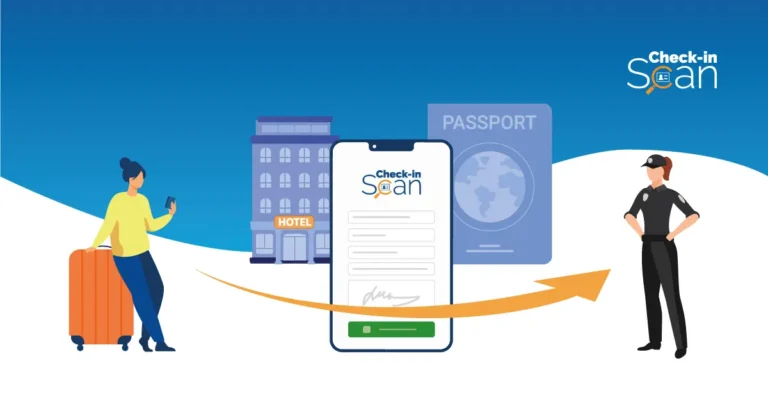
Online check-in : Thanks to the Check-in Scan , hotels can quickly register guests' passport or ID card data, streamlining the check-in process.
Currently, many hotels , airports , and government agencies use automated systems that scan the MRZ ( ) for check-in, guest registration, and access control, expediting the process and reducing human error. These technologies integrate with official databases and biometric systems to efficiently and securely verify user identity.
In facilities such as nuclear power plants or government buildings, the MRZ can be used as part of the access control system to ensure that only authorized people can enter.
By providing a standard and secure way to encode personal information, the MRZ helps prevent the fraudulent use of counterfeit travel documents.